


Red Foot Tortoise
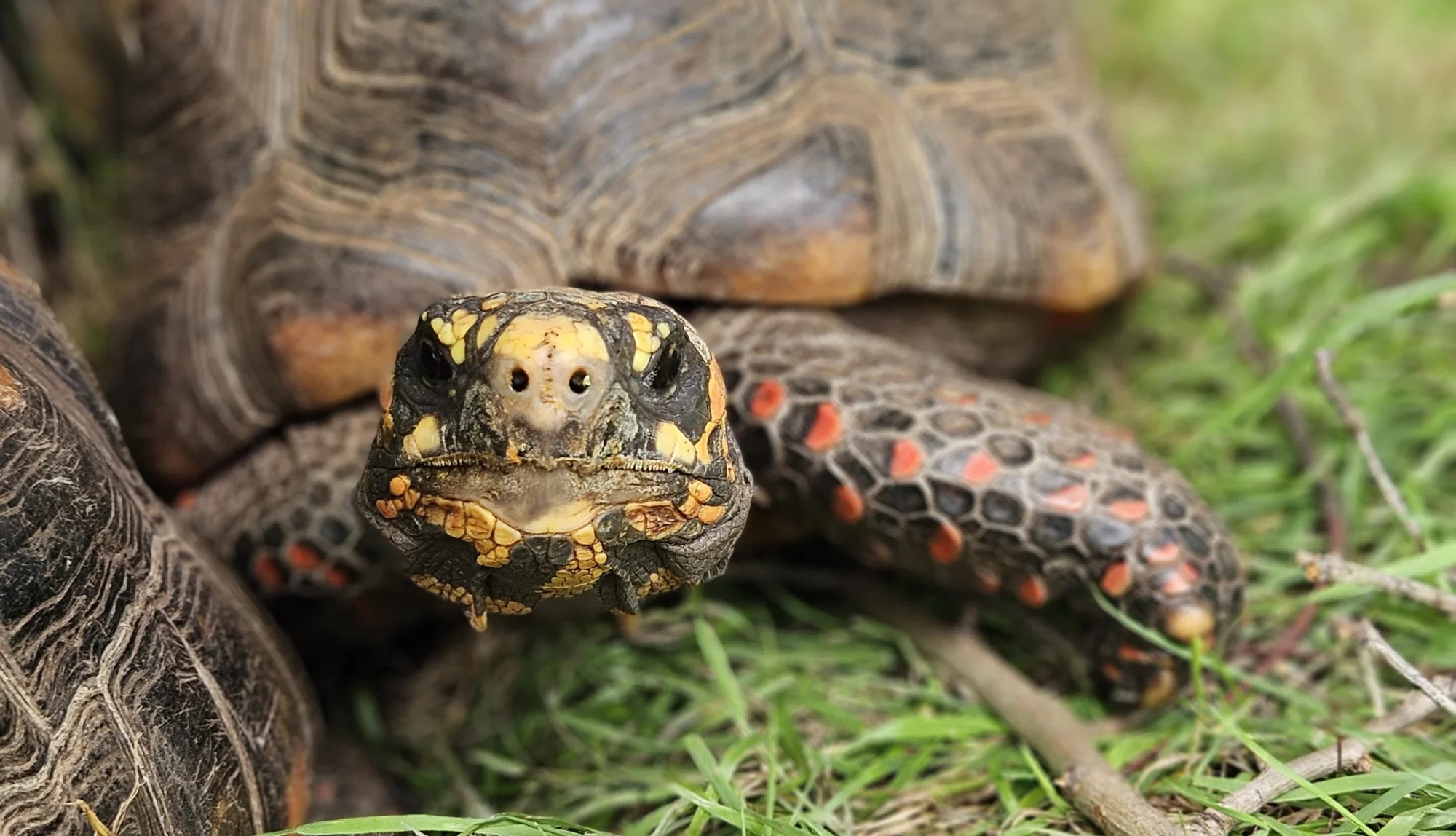
Red-footed tortoises get their name from the distinct patches of red, orange, or yellow on their legs, tails, and heads. Their shells are typically dark brown, black, or grey with a bumpy, concave appearance. Males tend to be larger than females, reaching up to 34 cm in length and weighing as much as 9 kg, while females generally grow to around 28.5 cm. Strangely, for tortoises, they regularly eat meat as part of their diet, snacking on carrion that they find lying around. However, the bulk of their diet consists of plant matter, particularly fruits, leaves, and fungi. They are a fairly social species and are happy to share food without fighting, although scuffles occasionally break out when competing for the attention of a female. Males often use head movements as signals to identify each other and may even attempt to flip rivals onto their backs during breeding disputes. To attract females, males make a clucking sound that resembles the call of a hen.

Diet
They are omnivorous, primarily eating leafy greens, fruits, fungi, and flowers. They also eat small invertebrates and carrion when available. Red-footed tortoises rely on a keen sense of smell to locate food, and their diet can shift based on seasonal availability. In cooler weather, their metabolism slows down, allowing them to survive on minimal food for extended periods.

FUN FACT
Eggs, hatchlings, and juveniles are highly vulnerable to predation from a variety of animals, while adults face few natural threats beyond jaguars and humans. In some regions, their meat is considered a delicacy, leading to overhunting. Despite their tough shells, they are often easy targets for illegal pet trade due to their passive nature. After mating, females dig a hole in the forest floor or clear a patch of leaves to lay their eggs, typically between five and fifteen at a time. The eggs incubate for three to seven months, with temperature determining the sex of the hatchlings. Once they emerge, the young tortoises are entirely independent, though only a small fraction survive to adulthood.

LIFE SPAN
50+ years.

HABITAT
Red-footed tortoises are native to northern South America, ranging from Panama to Argentina, and are also found on Caribbean islands like Trinidad and Barbados. They inhabit a variety of environments, including dry and wet forests, savannas, and grasslands. These tortoises are not territorial and often roam in search of food. They tend to be most active during the day, especially after rainfall. To regulate their body temperature and avoid predators, they frequently take shelter in burrows, hollow logs, dense vegetation, and piles of forest debris.
