Rio Fuerte Beaded Lizard
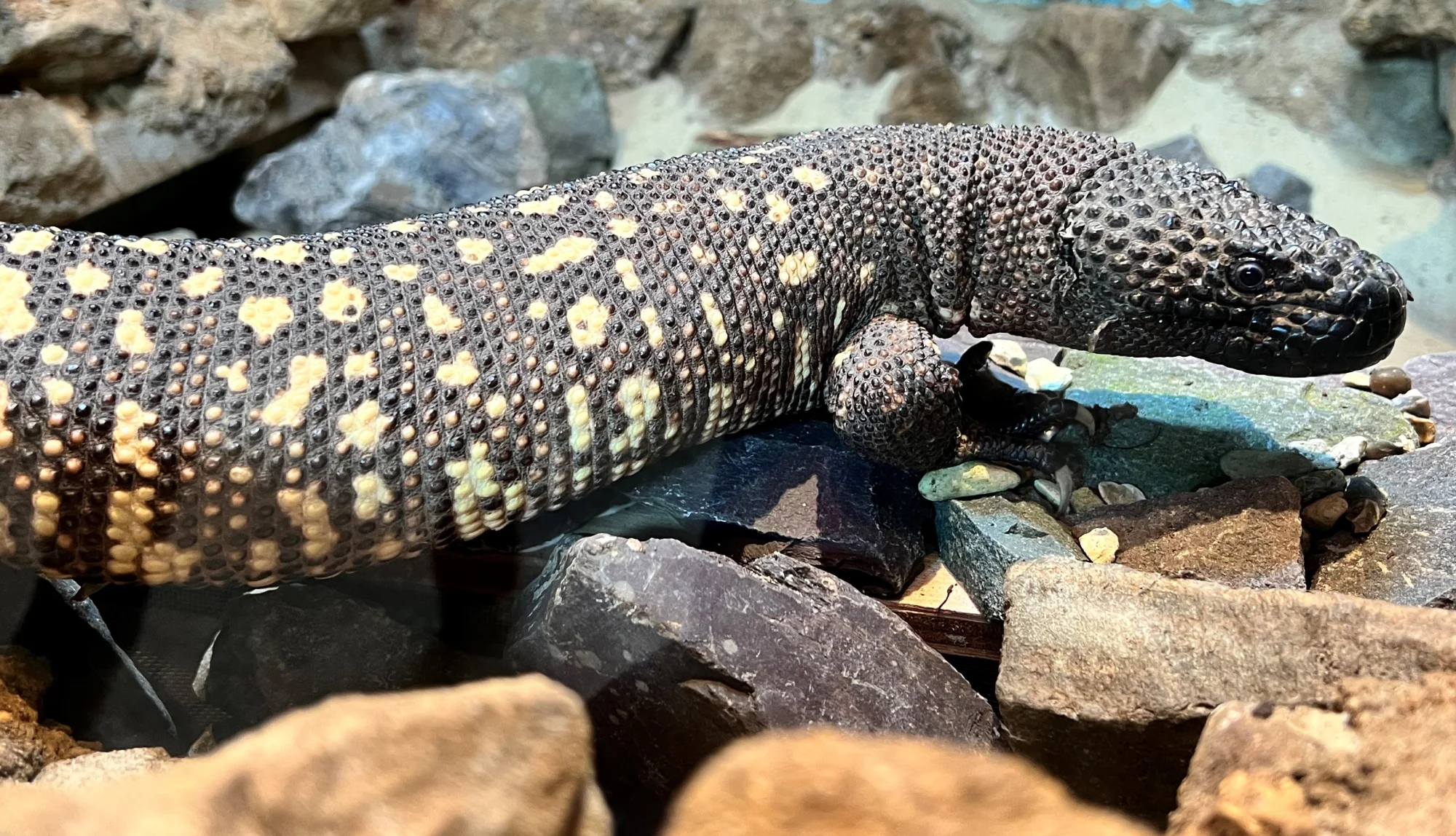
Rio Fuerte beaded lizards are one of only two venomous lizards in the world, along with the Gila monster. Though bites are rare, their venom can cause local pain, dizziness, vomiting, and low blood pressure in humans. These lizards have strong jaws and specialised grooved teeth that allow them to deliver venom through a chewing motion. They rely on this venom primarily for defence, but it may also help subdue prey. Before biting, they often display warning signs like hissing or gaping their mouths. Their name comes from the bead-like texture of their thick, bumpy scales, which are typically dark brown or black with yellow markings. They have a broad, flat head and short, muscular legs, making them well-adapted for their burrowing lifestyle. Their tails, which appear thick and swollen, serve as fat storage, providing them with an energy reserve when food is scarce. These lizards spend most of their lives hidden underground – up to 95% of the time – using tunnels they dig or burrows abandoned by other animals. They are nocturnal, meaning they are most active at night, though they move slowly and clumsily when they first emerge.


Diet
Rio Fuerte beaded lizards are carnivorous. Their diet includes bird eggs, small rodents, lizards, frogs, insects, and even nestlings of birds and small mammals. They typically swallow their food whole but will break open eggs before eating them.

FUN FACT
Their scientific name translates to "the terrible one with studded skin." Unlike snakes, which inject venom through fangs, these lizards must bite down and chew for their venom to take effect.

LIFE SPAN
These lizards can live over 30 years. They have few natural predators, with coyotes and some birds of prey being among the only threats they face.

HABITAT
Rio Fuerte beaded lizards are native to the forests and shrublands of western Mexico, particularly in southwestern Chihuahua and southern Sonora. They prefer thorny scrub and forested areas, often taking shelter under rocks or inside burrows to escape the heat of the day.